Reading Budget News: Follow the Money in 2026
Budget stories are where journalism and arithmetic meet, and where readers are most often invited to react to a number without being told what it means. A headline can announce a record investment, a painful cut or a surprise surplus, and all three can be true of the same document depending on the year, the baseline and the accounting. Following the money is a method, not a slogan.
Find the baseline
A budget is a plan compared with a previous plan, and the comparison is where the story lives. A rise in a department's allocation may still be a real-terms cut if inflation is higher. A fall in one line may be offset elsewhere, or simply moved to another budget. Before you judge the headline, find the current-year figure, the proposed figure and the inflation assumption. If the story does not give them, the original budget documents will.
Separate one-off money from recurring money
Governments and organizations often announce a large sum that is spent once, while the headline implies a permanent change. A new building, a one-time grant or a pandemic-era fund can dominate a total without affecting the ongoing budget. The reverse is also common: a modest annual increase that compounds over a decade is described as small because the yearly number looks unremarkable. Ask how long the money lasts and what happens when it runs out.
Nominal versus real
Ten percent more money next year is a cut if prices rise twelve percent. Budget reporting that ignores inflation can make stagnation look like growth. Real terms means adjusted for purchasing power, and it is the only fair way to compare across years. When a story mixes nominal and real figures, the comparison can reverse. Look for the phrase "real terms" and, if it is missing, do the adjustment yourself using the published inflation assumption.
Who pays and who receives
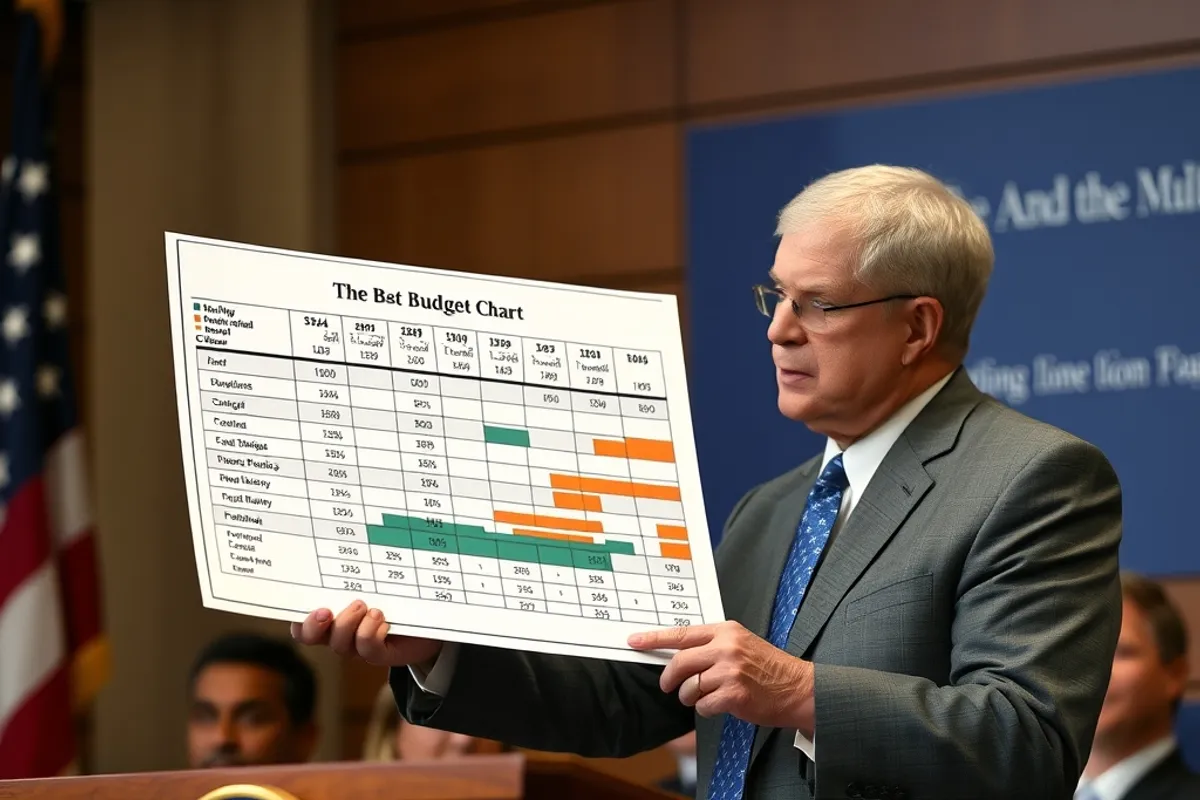
Follow the money in both directions. A spending promise must be funded by tax, borrowing, a cut elsewhere or an optimistic forecast. Each choice has a different consequence and a different timeline. A program that starts in three years may never survive the next election. A tax cut financed by borrowing shifts the cost to future budgets. The most useful budget stories name the trade-off explicitly rather than presenting the spending and the funding as separate announcements.
Also check who is eligible. A benefit that exists but is hard to claim reaches fewer people than its headline suggests. Look for take-up rates, application requirements and administrative capacity. A promised service with no staff is a plan, not a delivery.
"A budget is not a list of numbers. It is a list of priorities with the costs moved somewhere, and the somewhere is the story."
Read the document, not the summary
Budget summaries are written to be clear and, often, flattering. The tables are where the detail sits: assumptions, contingencies, departmental splits and footnotes. Open the main table and compare it with the headline. Check whether the totals reconcile and whether the largest line is actually the one being discussed. A surprising share of budget coverage is built on a summary that omits the item driving the total.
Follow the implementation
The budget is the beginning, not the end. Money approved can be reallocated, delayed or underspent. Follow the quarterly or annual reports that show what was actually spent. Compare the plan with the outturn. This is where the most important stories often sit, because the gap between promise and delivery is rarely announced with a headline.
Keep a simple tracker: line item, promised amount, actual amount, date. After a year, the pattern is usually clear. Readers who want to hold a decision-maker to account need the outturn figures, not the announcement. The same discipline applies to local budgets, which are often easier to obtain and just as revealing.
The bottom line
Ask what the number is compared with, whether it is one-off or recurring, nominal or real, and who pays. Read the table and follow the spending after the announcement. For more, see our guide to separating fact from framing and browse the News Analysis section.